„Deutsch-Ukrainische Akademische Netzwerk Kooperation ONU-MHH (DUANKOM)” (Project-ID 57808752)
Biological Sensors and Diagnostics

How can a cell, microorganism, enzyme, or antibody serve as the basis for a modern diagnostic system? The course introduces the principles underlying the design and operation of biosensors, the mechanisms by which biological reactions are converted into measurable signals, and modern approaches to diagnostics based on cells, microorganisms, enzymes, antibodies, and nucleic acids.
Key terms: sensors, biosensor system, biological reaction, diagnostic tools
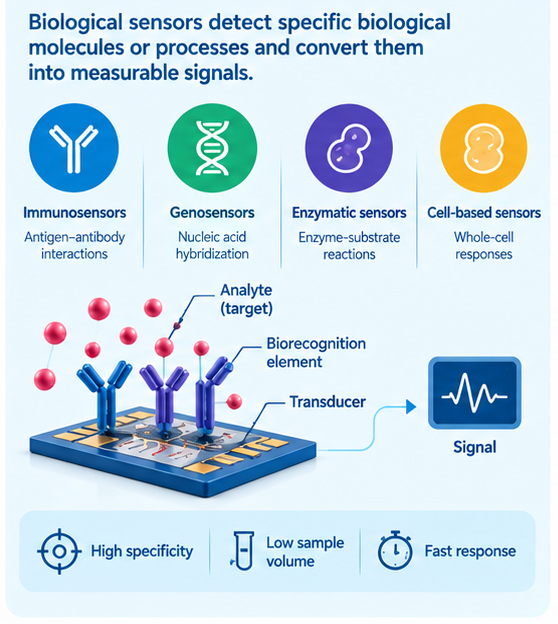
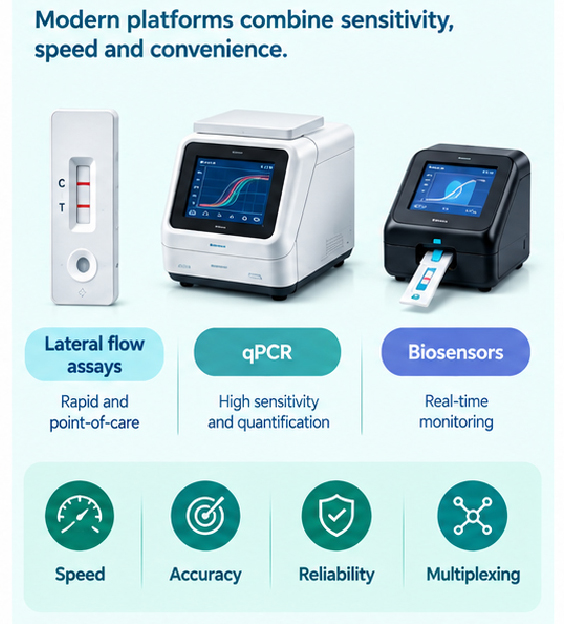
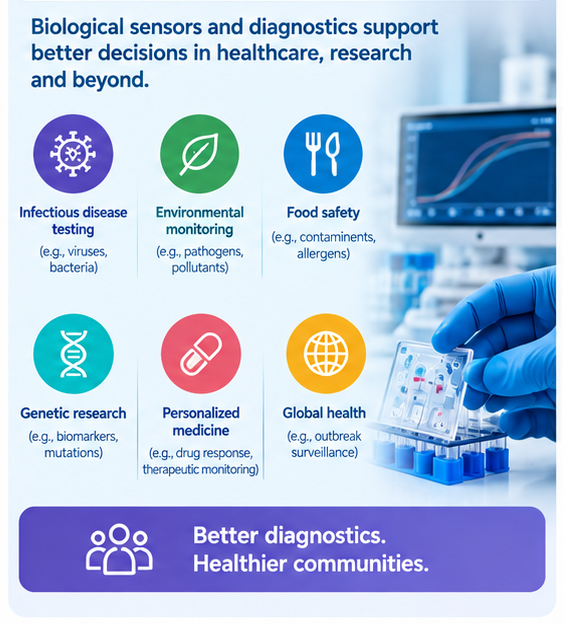
The course focuses on modern principles underlying the operation of biosensors and diagnostic systems, the mechanisms by which biological reactions are converted into measurable signals, and the main types of sensor and diagnostic platforms. Particular attention is paid to electrochemical, calorimetric, piezoelectric, and optical biosensors, as well as cell-based, microorganism-based, enzyme-based, immunodiagnostic, and molecular diagnostic systems. Students develop skills in analyzing the operating principles of various biosensor systems, evaluating their potential applications in research, biotechnology, and diagnostics, and developing conceptual approaches to the design of biosensors and diagnostic platforms.
The purpose of the discipline is to provide students with a set of knowledge necessary for qualified approaches to solving practical problems in the field of biosensing, methods of creating and applying biological sensors and diagnostic tools in Biotechnology. The acquired knowledge can be applied in work at Research Institutes and Institutions in the Biological and Biotechnological fields.


Forms and Methods of Instruction
The course is delivered in the form of :
- lectures – 16 hours*
- practical classes – 14 hours*
- independent study – 60 hours*
The following teaching methods are employed electronic and information-based methods (presentations, video materials, methodological guidelines, lecture notes); research-oriented methods (student participation in research projects related to the discipline); assessment and control methods (tests, situational tasks, evaluation of practical skills).
Control and Assessment Methods
Methods of current/periodic assessment include oral questioning (during practical classes, evaluation of individual assignments, assessment of presentations), and MCQs (paper-based or computer-based) for each content module.
The final grade is calculated by taking into account all scores obtained in current assessment and the Final Task for the two content modules.
The final form of assessment for the discipline is a pass. Assessment of academic performance is based on a 100-point scale.
Periodic knowledge assessment is conducted after completing the material of each content module. The Lecturer informs students in advance about the dates and content of assessment activities.
Detailed information on assessment methods and criteria is provided in the course working program.
For all organisational inquiries, please contact ONU-DUANKOM coordinator, Tetiana Ivanytsia.
t.ivanytsia@gmail.com
About this course
 Level 2: Master’s
 135 hours study:
Credits - 4,5
Contet modules - 2
-
Field of Knowledge: G Chemical and Bioengineering
-
Specialty: G21 Biotechnology and Bioengineering
-
Educational and Professional Program «Biotechnologies and Bioengineering»
Prerequisites:
Basic knowledge of the courses:
- «Physics»,
- «Microbiology»,
- «Biochemistry»,
- «General Cytology»,
- «Genetics»,
- «Molecular Biology»,
- «Organic Chemistry»,
as well as familiarity with research methods in Microbiology and Biotechnology and the principles of biotechnological process design and factors affecting process efficiency.
Postrequisites:
Application of biosensor and diagnostic system concepts in advanced professional courses and use of modern knowledge to solve practical problems in Biological Sciences.